The first time I enjoyed a 10 years old with ADHD ask a pony to back 3 steps, the whole arena changed. He had actually been bouncing given that the moment his boots struck the gravel, words tumbling out faster than his mind can corral them. Then he breathed out, settled his shoulders, glided his by far the lead rope, and asked. The horse blinked, rocked her weight, and went back. Three clean actions. Silence dropped in a great way, the kind where interest narrows and a child understands, I did that. We did that. If you have actually collaborated with youngsters or adults who live with ADHD, you know just how unusual and valuable that type of peaceful capability can feel.
Therapeutic horsemanship and the more comprehensive family of equine-assisted solutions do not cure ADHD. They do something less showy and better. They create a setting where the nerves can work out, where emphasis borrows the rhythm of hooves, and where success is secured in the body rather than a checklist. The discovering sticks because it is felt, not simply taught. When a steed relocates when you take a breath, that lesson lives in the muscles and the midbrain, not only the prefrontal cortex that often tires before the end of an institution day.
Why steeds fit ADHD brains
ADHD is not an absence of focus. It is a rate of interest based nerve system that focuses on novelty, significance, and seriousness. The rubbing shows up when jobs really feel level or effects are remote. Equines, being victim animals, provide instant and straightforward comments. They read position, breath, and objective the method we checked out message, and they mirror it back without judgment or sarcasm. You slouch with scattered energy, they wait or wander. You straighten your feet, concentrate your eyes, and soften your jaw, and they attach. That loophole provides the ADHD brain what it likes best, live response.
There is additionally the gift of rhythm. Gait patterns bring predictable sensory input. At a stroll, each step provides a mild 3 dimensional activity with the cyclist's hips and back. For several customers, especially those that seek stress and anxiety support with equines, that repetitive persuade arranges the body in a way that relaxes thought spirals. On the ground, leading a horse with posts or cones provides a comparable cadence. The task has a clear beginning and end, and the equine's mass needs existing minute attention. A half ton pet will certainly keep you sincere regarding where your feet go.
Finally, equines welcome somatic recognition. Before a change or a turn, we teach cyclists to check jaw, shoulders, breath, and stomach. That check ends up being a mobile ability. Parents tell me they hear their kids whispering barn signs prior to math tests or bedtime. Equine-facilitated health care do not need lingo to be effective. The body is the classroom.
Groundwork before saddles
People frequently wish to leap right to riding. The saddle has its magic, yet ADHD equine learning support generally begins with foundation. Early sessions often look like a strolling reflection disguised as a barn duty. We brush an equine with long strokes that follow the coat, we select hooves with purposeful treatment, and we lead in patterns that string together quick wins. These jobs train sequencing without the weight of a worksheet. They additionally prime the steed human relationship.
I go for sessions that relocate every ten to fifteen minutes. For a 8 year old that flares when asked to rest still, this might imply 3 sections: grooming with a goal, a barrier pattern on a lead, then mounted strolling with guiding games. For a teen, we might invest the whole hour on the ground perfecting a freedom circle because that is where the spark lives that day. ADHD grows when objective satisfies motion. Equine-assisted tasks provide both.
When focus fractures, the equine uses a mirror. If a client jerks the rope while glancing at a bird, the steed will typically increase its head or walk past the halt. Instead of scold, I can indicate the equine. See exactly how he lost you when you looked away. Attempt once again, eyes on the cone. That prompt psychophysiological feedback turns adjustment into curiosity.
The science that explains the smile
We do not require to mystify what is taking place. The vestibular and proprioceptive systems, the ones that tell us where we remain in space, obtain a stable stream of input throughout both installed and unmounted work. For lots of with sensory challenges, this is not simply positive, it is regulative. The deep stress of grooming, the reciprocal coordination of leading on the right and after that the left, and the direct motion of the walk all feed systems that frequently run either too warm or as well cold. Call it different treatment for sensory challenges if you like, but what it truly supplies is a lab where policy can be experimented a partner that cares if you are tuned in.
On the cognitive side, we develop executive function by requesting preparation and sequencing in bite sized, embodied methods. For instance, established a five post follower on the ground. The client chooses a course, names the actions aloud, and after that leads or adventures the course. If we miss out on a pole, we reset the series and try once again. There is no worksheet to lose, and the reward is visceral, a tidy arc without any clatter.
This is where experiential learning with horses radiates. It is not a lecture about impulse control, it is an online demonstration. You breathe also quickly into a quit, the horse leaks onward. You reset and locate a slower exhale, the steed stops square. We secure the lesson with words only after the body has actually tasted success.
Clear roles, clean language
Families usually ask me to clarify the alphabet soup: healing horsemanship, equine-assisted training, equine-facilitated training, equine-assisted solutions. Here is the simple version. Therapeutic horsemanship typically suggests flexible riding and horsemanship taught by trainers with specialized training, frequently via companies like PATH Intl. These sessions target functional goals like balance, coordination, attention, and communication. Equine-assisted mentoring sits in the individual development camp, more regarding routines, leadership, and way of thinking than professional therapy. Equine-facilitated health is a broader umbrella that can include psychological health and wellness work with accredited specialists, in addition to body based methods like breathwork, sensory integration, and mindfulness. All share one assumption, the equine is a companion, not a prop.
If a client is working through a certain medical diagnosis like ADHD or autism, I collaborate with their existing team. For an autism equine discovering program, we may line up with ABA or job-related treatment objectives. For ADHD, we may track on task intervals or shifts between recommended and non favored tasks. The tag is lesser than the clearness of the plan.
A day at the barn, minute by minute
Most focus controlled sessions run on a rhythm. An example 60 minute port for a 9 years of age may resemble this.
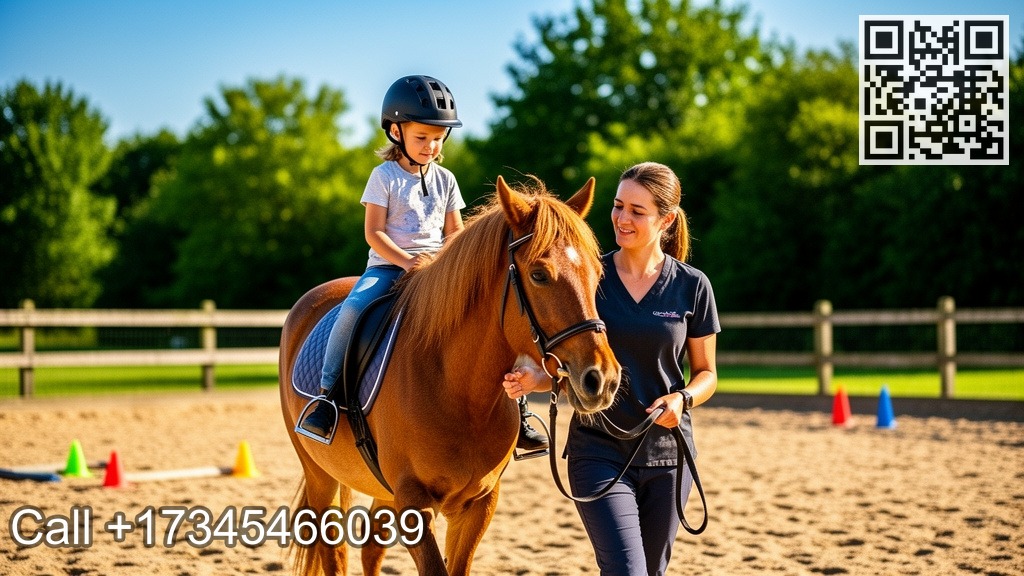
- Arrive and check in. Safety helmet on, body scan, and a two sentence plan for the hour. The guideline is basic: claim what we are doing, not what we are avoiding. Grooming with purpose. Pick 3 body parts, brush to shine, and matter strokes out loud. We select hooves with a left to ideal sequence, after that swap sides and repeat. Ground pattern. Lead via a triangle of cones, stop at each factor, and back 3 steps at the last cone. The customer calls the signs to the steed out loud, one breath for every ask. Mount and adventure. Stroll on, whoa, and turns using eye emphasis and belly breath. We add a pole pass if emphasis holds. Otherwise, we circle back to stops and clear lines. Cool down and debrief. Hand walk, after that a 2 minute reflection: What worked. What we will try next time. The steed gets a scratch in his preferred area as thanks.
The objective is not to stuff the program. The objective is to produce a stable pattern the client can predict. Predictability is a kindness to the ADHD brain, and it frees up energy for the job that matters.
Sensory setup that saves the day
Barns are busy areas. Sounds bounce. Scents take a trip. For a client with sensory sensitivities, a small modification early can avoid a blowup later on. I keep devices organized by shade and structure so the mind does not need to hunt. We groom in a quiet edge, away from banging gates. I prefer horses with a soft eye and a large ribcage that provides more linear activity and much less side to side persuade. If a kid is sensitive to girths and bands, we begin bridleless groundwork or bareback pad rides to develop count on prior to adding more tools. For a grown-up customer who hungers for deep pressure, a surcingle band under the hand can transport that need securely instead of clamping the reins.
Veterans of equine-assisted services will tell you, the very best sessions usually look easy from the outside. The magic remains in the setup.
Turning impulsivity into an asset
One of my favored parts of ADHD equine learning assistance is viewing so called impulsivity develop into quick read, fast act leadership. In the field, rapid is okay by default. It is only dangerous when it is blind. We train clients to move speed from a reflex right into an ability. You can scoot after you see. That is the mantra.
A teen who bolts with guidelines in class could become the most efficient leader on a ground driving exercise. She notices the steed's shoulders beginning to wander and corrects before I state a word. We name the win: That was rate with recognition. Shop that feeling.
Mounted video games use this as well. Barrel weaving or pole flexing at a stroll demands consistent micro choices. We coach eyes to the following target, not the one under your nose. The body complies with eyes. Lots of ADHD bikers flourish on that particular unbroken chain of little, significant options. They leave the sector with cheeks flushed and a basic sentence, I could feel my thinking.
Coaching that respects the horse
Equine-assisted coaching borrows tools from management advancement due to the fact that equines will certainly not adhere to untidy interaction. Customers learn to set a clear purpose, select a path, and devote. Half asks from half bodies produce half feedbacks. It is a reasonable system.
In group structure with horses, the same concepts range. I have actually watched company teams stand in a circle around a mare, everyone trying to lead at the same time. The mare plants her feet in the dirt and blinks. We pause and assign functions, one lead, one assistance, one viewer. The mare sighs and actions off like it was her concept. ADHD employee commonly succeed here, spotting patterns and invigorating the group when the plan delays. The equine's nonverbal reality informing keeps the power from tipping into chaos.
When anxiety appears, we apply the same regard. Stress and anxiety assistance with steeds is not about compeling tranquility. It has to do with co managing with a pet that requires existing stressful honesty. If a client's hands shake, we name it and root feet to ground. We take a breath till the steed's eyelids soften. After that we take one step, not twenty. Progress that holds beats progress that charms after that shatters.
Safety, consent, and fit
Every equine program, healing or otherwise, rides on safety and security and permission. Horses obtain a say. Customers get a say. If a horse pins his ears during brushing, we adjust pressure or positioning. If a client stops at installing, we park the saddle and work a freedom circle until both bodies clear up. Saying no in the barn is not failing. It is practice for the rest of life.
Not every steed fits every customer. Some horses tolerate fidgeting, others locate it disconcerting. I keep a tiny herd with different temperaments so I can combine a consistent, reduced respond mare with a high power youngster and an extra responsive gelding with a teenager that takes advantage of delicate comments. We switch over sets as skills grow.
Edge cases matter. Serious allergies to dander or hay require preparation, sometimes with a covered up session or exterior brushing only. A background of injury around pets asks for slower pacing and more control offered to the customer. For customers with autism who prefer clear, imperishable routines, I maintain one obstacle layout regular for weeks before presenting a brand-new variable.
When riding aids, and when it does not
Mounted job grabs focus, however it is not constantly the very best tool. If a client's postural control is still developing, a 15 minute ride can drain emphasis for the remainder of https://sethvkom049.bearsfanteamshop.com/conscious-early-mornings-at-the-barn-equine-facilitated-wellness-practices the hour. In those cases, we construct core and balance on the ground first. When we ride, we keep it brief and end on a success, not a wobble. On the other hand, I have clients for whom the saddle is the only location their mind silences. They get here messy, mount up, and discover a breathing pattern on the 2nd lap. We comply with that thread.
One honest border: steeds are not a one dimension answer for extreme behavior crises. If a customer is in a phase of regular aggressiveness or building destruction, we often stop equine job or framework it with added professionals on site. The barn has to stay secure for everyone.
What progression looks like in actual numbers
Families wish to know just how to gauge success without turning the barn into institution. We track a few simple metrics due to the fact that numbers guard against rose colored tales. For very early sessions, I tape minutes on task prior to a redirection. A common variety moves from 2 to 5 mins in the first month, towards 8 to 12 minutes by month three. I likewise note the variety of shifts completed without prompts, such as moving from grooming to leading or from bring about installing. We celebrate when a customer goes from absolutely no unprompted transitions to a couple of in a session.
Skill markers matter also. Leading an equine at the shoulder with a slack rope for a 50 foot straight line is a high level focus task. So is riding a square of four cones with clear edges at the stroll. These are not mystical objectives. They transfer. A straight line lead seems like walking to course without drifting. A square of cones feels like finishing 4 steps of a morning regimen, each with a start and an end.
Working across disciplines
When equine-assisted solutions belong to a more comprehensive strategy, the gains magnify. Physical therapists can send target sensory diets that we integrate with grooming stress and installed tasks. College groups can share IEP goals around continual attention or self campaigning for. We report back in simple language, such as, Client made use of the body scan manuscript independently two times today before asking the equine to halt. If a mental health carrier is included, sessions can include carbon monoxide policy workouts that connect straight to therapy homework.
This cross talk keeps the barn from becoming a silo. It likewise helps parents see patterns. The breath that stops an equine becomes the breath that protects against a sibling debate from escalating.
A short, barn prepared checklist for ADHD riders
- Hydrate before arrival, and pack a small treat that does not leave sticky hands. Wear layers that can lose warm or include heat without fuss, plus boots with a closed toe and a small heel. Arrive 5 mins early to clear up, make use of the bathroom, and review goals. Bring an acquainted manuscript for regulation, such as a three action body scan, and exercise it in the car. Plan an article session barrier of 10 to fifteen minutes before the following need to lock in gains.
Games that teach without nagging
Most knowing in the field hides inside play. A favorite for impulse control is Traffic signal, Thumbs-up at the walk. We add yellow, which suggests prepare, not yet. The cyclist discovers to take a breath down, reduce stride, and afterwards quit on red. Groundwork variations make use of a cone as the traffic signal, and the equine sees the same signals the client is learning to send. One more reputable game is the mail box route. We established two barrels like mailboxes on opposite sides of the sector. The rider gathers a letter at one, brings it thoroughly, and supplies it to the other. Guiding, pacing, and planning blossom without a lecture.
When focus frays, we narrow the target. As opposed to a six cone serpentine, we do 2 ideal turns with clear eyes and silent hands. Customers discover to close the loop on small tasks, which commonly anticipates better follow up at home.
The softer skills that last
Parents often enlist for emphasis and leave discussing self-confidence and compassion. Equines instruct approval constantly. You can not require a thousand extra pound partner without scaring them and yourself. You discover to ask. You learn to wait. You discover that your inside weather modifications your outdoors results, and you get sincere about managing that weather.
For customers that have actually heard a lifetime of no, the barn give out of course in stable doses. Yes, you can lead that equine throughout water with the appropriate arrangement. Yes, your breath transformed his feet. Yes, your nervous system can downshift on cue. These are not abstract affirmations. They are observed facts.
For adults who never ever found their seat
Plenty of grownups with ADHD show up years right into careers, still seeming like they are obtaining someone else's executive function. Equine-facilitated training provides a location to practice authority that is not weak. An usual workout sets a customer with an equine free in a round pen. The task is to invite forward, guide a couple of turnabouts, and then welcome the steed to connect. There is no rope to compel conformity. The steed chooses whether your demand is clear, reasonable, and consistent. Specialists who stay in quick talk and concepts locate this supporting. The steed does not care about your lift pitch. It cares if your feet and eyes agree.
Many grownups report that after six to 8 sessions, they take items of the sector into the office. They stand up before digital conferences to open breast and soften jaw. They visualize a square of cones prior to a difficult discussion, one corner for paying attention and one for stating a demand. These small acts are mobile wins.
A useful course to your very first session
If you are considering equine-assisted coaching or restorative horsemanship, start regional and ask clear inquiries. Qualifications vary. Seek programs that speak clearly concerning safety, horse well-being, and scope of technique. Ask exactly how they tailor sessions for ADHD. Listen for specifics. A great solution consists of structure, selection factors, and concrete skills, not just vague talk about connection.
The initially session need to feel like a welcome, not a test. You need to leave with a feeling of what success could resemble over 3 months, and what home techniques will make sessions a lot more effective. If the barn can not name those, keep looking.
An easy means to structure a 12 week arc
- Weeks 1 to 2: Build count on. Brushing routines, brief leads, and a single placed goal like halt and stroll with breath. Weeks 3 to 4: Add sequencing. Simple barrier programs on the ground, 2 direction adjustments mounted. Weeks 5 to 8: Rise intricacy with choice. Customer styles part of the pattern, decides when to ride versus ground work. Weeks 9 to 10: Generalise skills. Attempt a new equine or a new field edge, bring body scan abilities into light distractions. Weeks 11 to 12: Settle. Take another look at baseline jobs and step gains, established a plan for the following quarter with client input.
By completion of a quarter, the toughest gains are usually the silent ones. Changes that made use of to derail the session come to be routine. The equine meets a consistent partner, not a storm. At home, research battles could still appear, yet they often tend to shorten, and the household has actually shared language to browse them.
Where body and mind satisfy, steeds hold the line
If you strip away the buzzwords around equine-facilitated wellness, you are entrusted a barn, a few thoughtful people, and a herd of delicate, truthful animals. For people with ADHD, that configuration provides the brain a network and the body a task. It is uncommon to find a task that trains focus, regulation, and firm in the exact same hour without scolding or displays. Steeds do that since they require quality and reward it instantly.
The kid that backed his horse 3 actions now closes his eyes before examinations and takes a breath similarly he took in the arena. He claims he can feel his feet. That is the win that lasts. Whether you call it equine-assisted tasks, equine-assisted coaching, or restorative horsemanship, the work coincides. We assist people find out exactly how to turn up, ask easily, listen with their whole body, and commemorate the small, repeatable victories that make the remainder of life simpler. Somatic recovery with steeds is not a motto. It is the day-to-day, sensible craft of attention, practiced one step at once, with a companion that will certainly not lie to you.